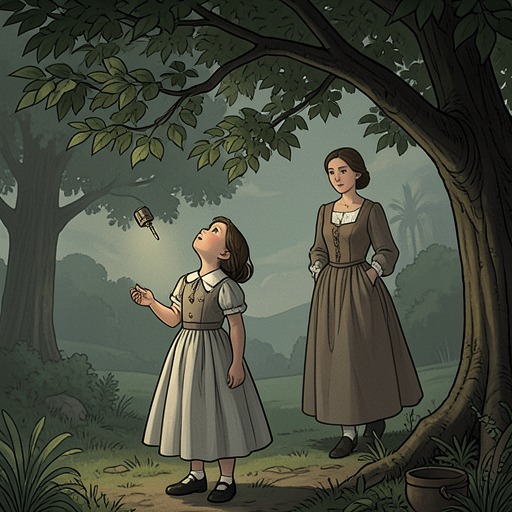
“I think it pisses God off if you walk by the color purple in a field somewhere and don’t notice it”
The Color PurpleShug Avery’s remark, “I think it pisses God off if you walk by the color purple in a field somewhere and don’t notice it,” makes attention to nature a spiritual act. The statement shifts the question of what pleases God away from human obedience alone and toward an exchange: the world offers beauty, and people can answer by noticing it. For Celie, that idea opens a way out of a constricting image of God and back toward the living world around her.
The Meaning of the Remark
Shug Avery rejects Celie’s suggestion that God is vain. In her account, God wants to share a good thing, and admiration is a form of response to that gift. The purple in a field is not merely scenery: its value lies partly in being seen. Shug also describes creation as responsive, saying that when God is angered, God makes something else, and that the world shows God trying to please people in return.
This exchange broadens the idea of spiritual attention beyond the single flower named in the remark. Shug says that everything wants to be loved and compares the ways trees seek attention with human singing, dancing, facial expressions, and bouquets. The analogy gives plants a presence of their own: nature is not only a backdrop to human feeling but part of a world that reaches outward and invites recognition.
Celie’s Change in Attention
Celie admits that she remains adrift and has been preoccupied with the old white man in her mind. She recognizes that this fixation has kept her from truly noticing what God makes: a blade of corn, the color purple, and little wildflowers. Her shift is concrete and perceptual. The field’s color becomes evidence of a world she had failed to see, rather than an abstract lesson about belief.
As Celie’s eyes open, the evil associated with Mr. ____ seems to shrink beside even a small bush in her yard, though it does not disappear altogether. Shug’s image of getting a man off the eye clarifies the change: Celie must loosen the obstruction before she can see anything fully. The remark therefore connects spiritual renewal to attention, while acknowledging that a new way of seeing does not erase the harm that shaped her earlier vision.
Nature Against the Image of Man as God
Shug warns that men try to make themselves seem everywhere—in food, in a person’s head, and on the radio—until their apparent omnipresence can be mistaken for God’s. Her counsel is to reject that confusion when praying and to turn instead toward flowers, wind, water, or a large rock. In this context, the purple field becomes part of a wider practice of redirecting attention from male authority to the natural world.
The remark’s significance lies in its reversal of spiritual scale. What might seem like a small failure to notice a color becomes a failure to receive the world’s offered beauty; what might seem like a vast, all-encompassing male presence is shown to be only one obstruction to perception. Celie’s renewed notice of corn, purple, wildflowers, and the bush near her home marks the beginning of a more direct relation to creation.